

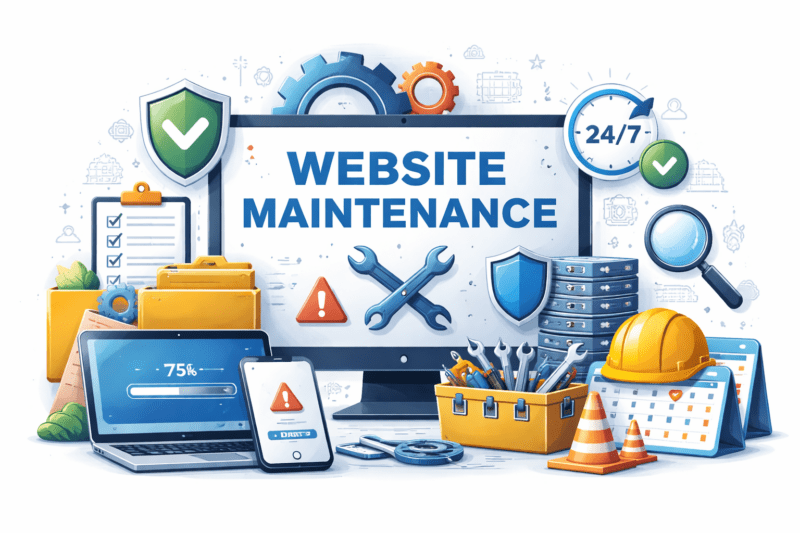
Launching a website often feels like crossing a finish line. In reality, it is the starting line.
Many businesses treat their website as a one-time project. It is designed, built, launched, and then largely ignored. Months pass, sometimes years. Plugins go without updates. Security patches are postponed. Backups become inconsistent. Performance gradually declines. Nothing appears obviously wrong until something fails, and by then the damage is already done.
Website maintenance may not be glamorous, but it is one of the most important ongoing investments a business can make in its digital presence. The internet does not remain static. Software platforms release continuous updates. Security vulnerabilities are identified daily. Browsers evolve. Devices change. Search engine algorithms adjust. A site that performed flawlessly last year may quietly become outdated without consistent oversight.
When maintenance is neglected, small issues compound over time. A minor plugin conflict can escalate into a site-breaking error. A missed security patch can open the door to malware. An expired SSL certificate can trigger browser warnings that erode trust instantly. Gradual database inefficiencies can reduce load speed and negatively affect search rankings. These problems rarely emerge overnight; they build silently.
Maintenance is not reactionary. It is preventative infrastructure. Professional website management includes regular updates to core files, themes, and plugins. It involves uptime monitoring, security scanning, performance optimization, consistent backups, and post-update testing to ensure stability. These processes work quietly in the background, protecting functionality and reputation.
More importantly, proper maintenance provides stability and confidence. When your website is consistently managed, downtime risks decrease, customer data remains protected, search visibility is preserved, and performance stays reliable. The investment you made in design and development retains its value rather than deteriorating over time.
A website is not a static brochure. It is a living digital asset that interacts constantly with evolving technology. Like any valuable asset, it requires structured care and oversight. Businesses that recognize this treat maintenance as infrastructure rather than an optional add-on. Waiting for something to break is always more costly than preventing the issue in the first place.