

Search engine optimization has a reputation for being technical, complicated, and reserved for specialists. For many business owners, the term alone suggests code, back-end files, analytics dashboards, and expensive monthly retainers. But the reality is far simpler. While advanced SEO can become complex, the foundational steps that move rankings are accessible to anyone willing to approach them with clarity and consistency.
The first thing to understand is that search engines are not looking for tricks. They are looking for relevance and clarity. If your website clearly communicates what you do, who you serve, and where you operate, you are already ahead of many competitors. Most small business websites under perform not because they lack technical wizardry, but because they lack structure and intentional messaging.
Start with your page titles and headlines. Every page on your website should answer one clear question. What is this page about? If you own a roofing company in Denver, a service page should not be titled “Our Services.” It should be titled something like “Residential Roofing Services in Denver.” Search engines rely heavily on page titles and primary headings to understand relevance. You do not need access to back-end code to improve this. You only need to be specific.
Next, examine your content. Search engines prioritize pages that answer real questions. Think about what your customers ask repeatedly. Pricing concerns, timelines, service areas, guarantees, and common misconceptions all make excellent content topics. Writing clear, informative paragraphs around those questions improves visibility naturally. Avoid stuffing keywords unnaturally into sentences. Instead, write as you would explain your service in person. Clear language performs better than forced phrases.
Internal linking is another overlooked opportunity. If you mention a service inside a blog post, link that phrase to the appropriate service page. This helps visitors navigate your website and helps search engines understand how your content connects. You do not need a plugin to do this. A simple hyperlink within your editor is enough. When your pages reference one another logically, your website becomes easier to crawl and easier to rank.
Mobile readability is equally important. Pull up your website on your phone and scroll through it honestly. Are paragraphs easy to read? Are buttons large enough to tap? Does text feel cramped? You do not need technical knowledge to identify poor user experience. If something feels frustrating to you, it likely feels frustrating to visitors. Improving clarity and spacing can directly impact how long users stay on your site, and engagement influences ranking.
Images deserve attention as well. Rename your image files before uploading them. Instead of uploading “IMG_3829.jpg,” rename it to something descriptive like “kitchen-remodeling-phoenix.jpg.” Search engines cannot see images, but they can read filenames. Adding a short, descriptive alt tag when uploading images strengthens context without requiring any code.
Consistency matters more than complexity. Publishing one well-written article per month that addresses real customer questions will outperform sporadic bursts of content. Updating outdated service descriptions improves performance. Refreshing older blog posts with clearer headlines and updated information signals relevance to search engines.
Finally, claim and optimize your Google Business Profile. Ensure your business category is accurate, your service areas are listed clearly, and your description explains exactly what you do. Encourage satisfied customers to leave reviews and respond to them professionally. Local visibility depends heavily on these signals, and they require effort, not technical skill.
SEO is not magic. It is clarity, structure, and consistency. While there are advanced strategies that go deeper into technical configuration, most small businesses can dramatically improve their rankings simply by being more intentional with their content and organization.
For business owners willing to invest time instead of money, the path is straightforward. Make your pages specific. Answer real questions. Connect your content logically. Keep your website readable and current. Search engines reward usefulness. And usefulness is something every business owner already understands.
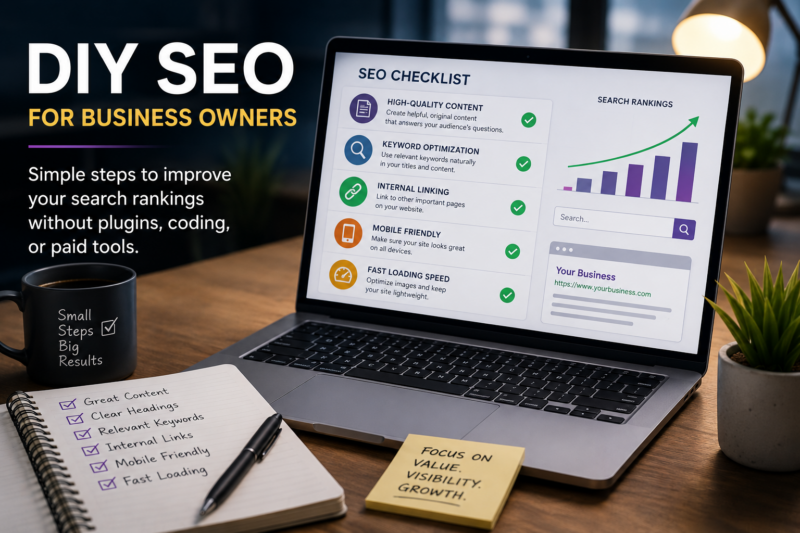
Feel free to download our PPwix Website Services SEO checklist to help guide you through boosting your search engine ranking. Download