

Most business owners believe a beautiful website equals a successful website.
It doesn’t.
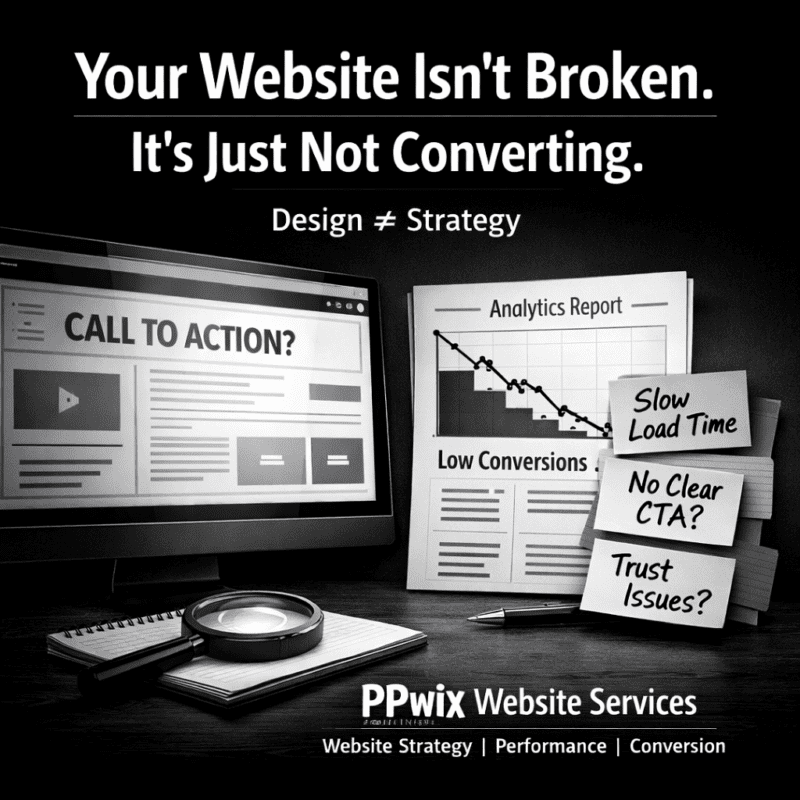
A website has one job: to move visitors toward action. If it’s not generating calls, bookings, purchases, or inquiries, it’s not working — no matter how modern or polished it looks.
One of the most common issues I see is the absence of a clear primary call-to-action. When visitors land on a page and have to think about what to do next, they simply don’t do anything. Attention spans are short. Clarity wins every time.
Another major problem is messaging that centers on the business rather than the customer. While your experience and background matter, they are not what visitors are searching for first. They arrive with a problem. They want to know quickly whether you understand it and whether you can solve it. If that connection isn’t immediate, they move on.
Performance also plays a critical role. Slow load speed is one of the quietest conversion killers. If your site takes more than a few seconds to load, you are losing potential clients before they ever see what you offer. It’s not dramatic. It’s just silent attrition.
Trust is equally important. Reviews, credentials, and a clear explanation of your process reduce hesitation. Without visible proof and transparency, even interested prospects may pause long enough to reconsider.
Finally, layout without strategy is just decoration. Design must be intentional. It should guide the eye, prioritize important information, and remove friction from decision-making. A website should lead visitors the way a good teacher leads students — clearly, confidently, and without confusion.
Many businesses assume they need more traffic. In reality, most don’t. They need better performance from the traffic they already have.
If your website feels more like a digital brochure than a conversion tool, it may be time to rethink the structure behind it.